New Interagency Partnerships Pivot from Diversity, Equity, and Inclusion (DEI) Legislation
By The Blog Source
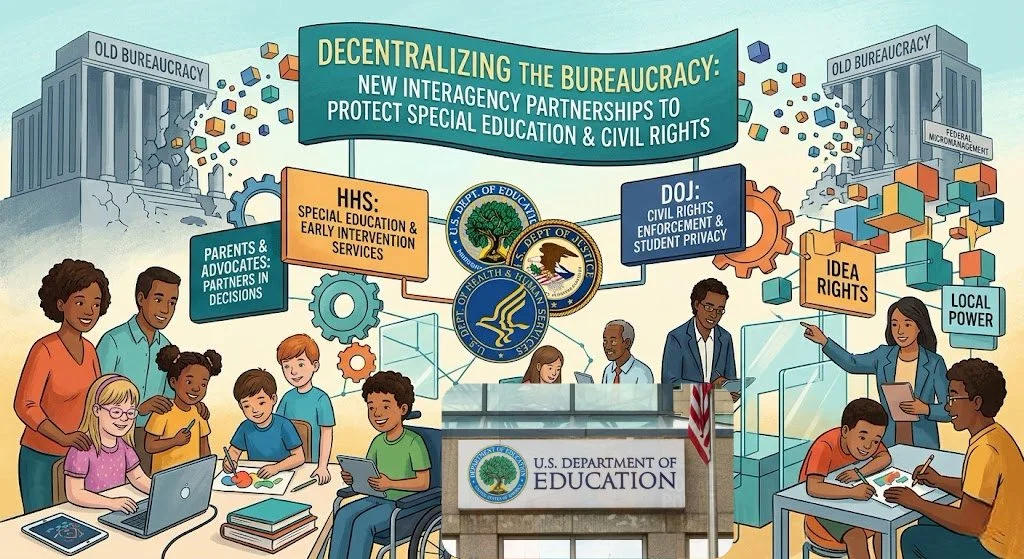
The landscape of federal education oversight is undergoing a monumental shift. Under the direction of the Trump Administration, the U.S. Department of Education has announced sweeping new interagency agreements designed to downsize Washington’s central education bureaucracy.
By shifting major responsibilities to other specialized federal branches, the administration is moving closer to its ultimate goal of winding down the department and returning primary educational authority to the states.



The Core Strategy: Department Downsizing Goals
Fully abolishing the 45-year-old Department of Education requires an act of Congress, as the agency was legally established under President Jimmy Carter. However, the administration is actively leveraging interagency agreements (IAAs) to systematically decentralize its power from within.
Tuesday's announcement marks the implementation of four new partnerships, adding to roughly ten previous arrangements. The overarching goal is simple: eliminate duplicate layers of federal management, cut through systemic red tape, and position oversight within agencies natively equipped to handle those specific operations.
As Education Secretary Linda McMahon summarized:
“The Trump Administration has been clear: as we scale back federal micromanagement when it hinders success, we are equally committed to bolstering the efficacy of federal oversight where it is essential.”

Experience the ultimate restoration of your gut health with Bio-Defense. (Use Promo Code: TrumpWon for Discount.)
The Essential Role of IDEA
Central to this transition is the preservation of the Individuals with Disabilities Education Act (IDEA). Originally passed decades ago, IDEA is a foundational federal law guaranteeing that eligible children with disabilities receive a free, appropriate public education tailored specifically to their unique needs.
Historically, parents have expressed frustration over the lengthy, bureaucratic, and costly efforts required to secure the services to which their children are legally entitled under the law.
Under the newly forged structural framework, the Department of Health and Human Services (HHS), led by Secretary Robert F. Kennedy Jr., will assume the lead role in special education oversight and IDEA enforcement. The core strategy is to combine academic outcomes with HHS’s large healthcare and developmental infrastructure, making the path from early intervention to independent adult employment smoother.

Start your day with a refreshing glass of Peach Mango Covilyte! Packed with energy, hydration, and a full spectrum of essential vitamins and minerals, it's a delicious way to fuel and protect your body.
Protecting Special Education and Bolstering Civil Rights
A major pillar of this transition is ensuring that federal protections remain fully intact while transferring operational oversight. The restructuring tackles this issue across two fronts:
Special Education Safeguards: The administration is not shrinking financial commitments to special education. In fact, the fiscal year 2027 budget request outlines a historic funding boost for state and local IDEA programs, alongside a $144 million increase designated to reduce the administrative paperwork burdens currently weighing down specialized educators.
Civil Rights Enforcement: Rather than relying on education bureaucrats to investigate legal violations, school-related civil rights enforcement will see an expanded role under the Department of Justice (DOJ). Led by Acting Attorney General Todd Blanche, the DOJ will assume a central position in evaluating and investigating education-based discrimination complaints, ensuring a coordinated, law-enforcement-backed stance against discrimination based on race, sex, or ability.
A Pivot from Diversity, Equity, and Inclusion (DEI) Legislation
This new structural baseline represents a fundamental shift away from the former administration’s focus on Diversity, Equity, and Inclusion (DEI) frameworks:
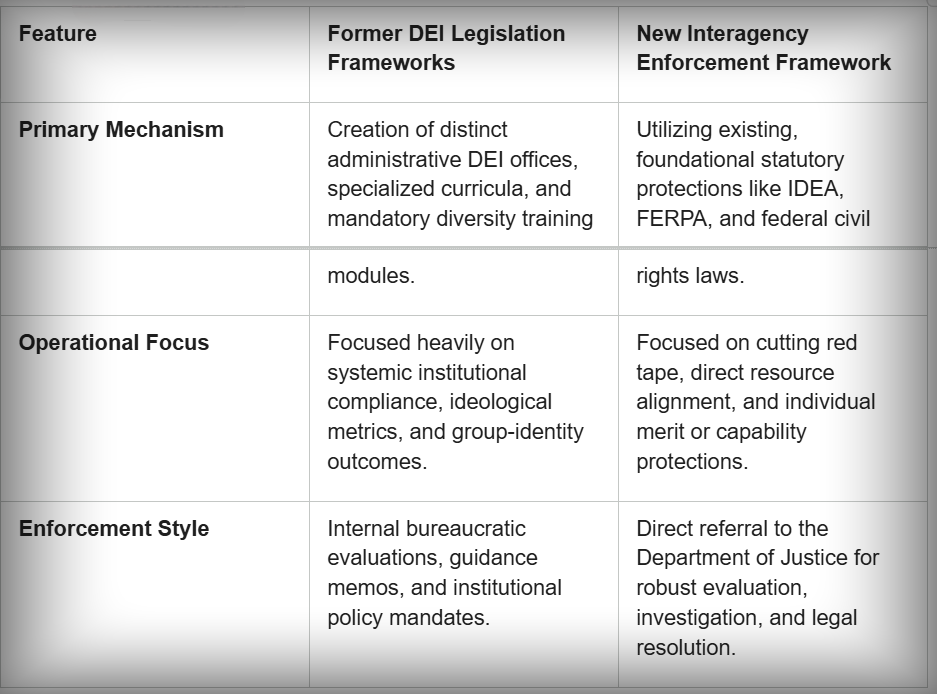
By leaning on the legal authority of the DOJ and the resource network of HHS, the administration argues it can provide more responsive, less ideological protections. The focus returns to foundational protections—making sure that every child has a clear right to learn in an environment free from discrimination, protected by established federal law instead of changing bureaucratic agendas.
Join the Inner Circle
To become a vital part of the journey, you can sign up for the Diamond and Silk Monthly Supporter Program. This program allows fans to provide ongoing support while gaining closer access to their latest updates and initiatives.
Where to Follow and Watch
You can find Diamond and Silk’s content and stay updated on the following platforms:
Video & Streaming: Catch their latest broadcasts and appearances on Lindell TV, Rumble, and Diamond and Silk Media.
Social Media & Community: Engage with them directly on Truth Social, VOCL, and ChatDit.
















Today, a growing and inspiring trend is taking root across the country: the physical spaces inside Muslim mosques and Islamic centers are increasingly stepping up to serve as official polling locations.