Beyond the AOC Rhetoric: What Section 219 of the NDAA Actually Means for U.S.-Israel Defense Cooperation
By The Blog Source
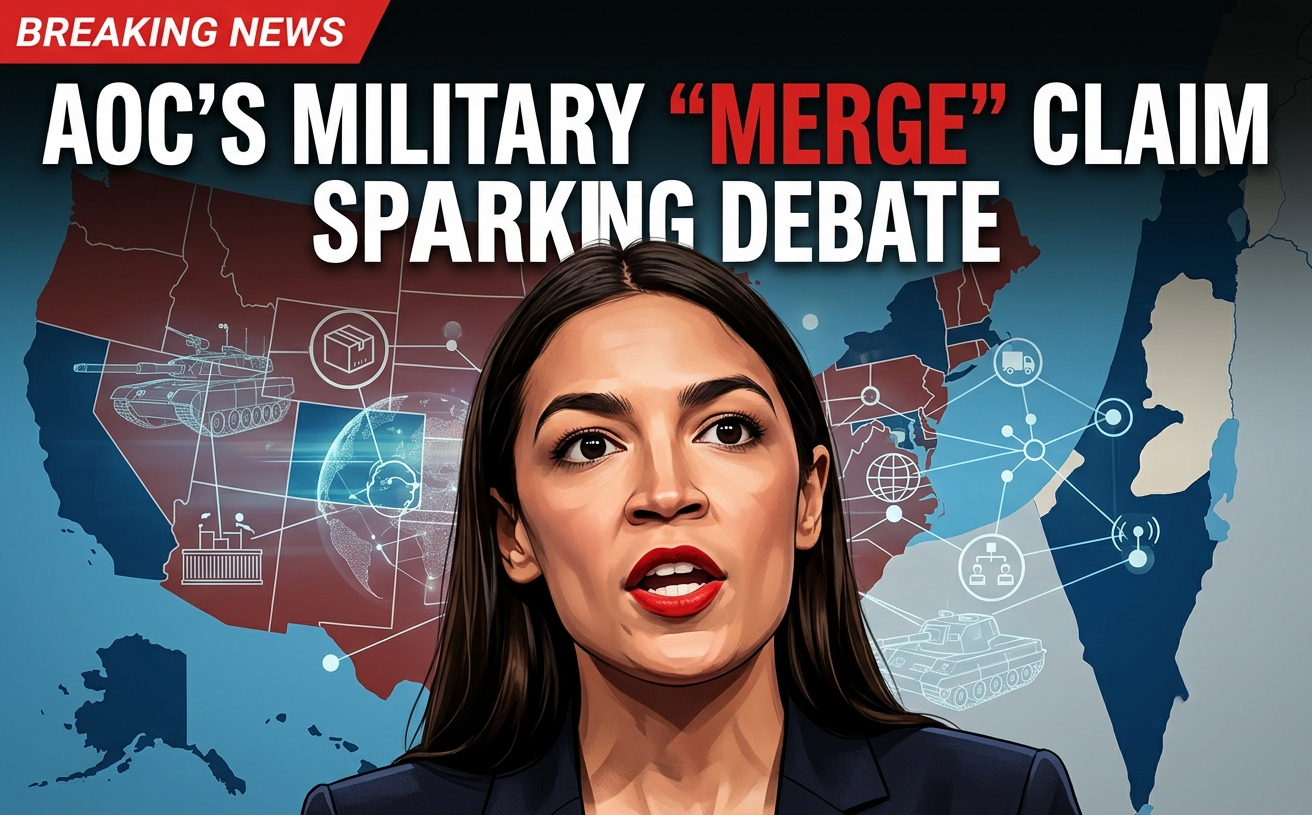
In modern political discourse, viral social media claims often overshadow the complex legislative text behind national policy decisions. A fiery debate erupted over the House-passed National Defense Authorization Act (NDAA), sparked by controversial statements regarding how the United States collaborates militarily with its closest Middle Eastern ally, as reported by Trending Politics
Here is a breakdown of what happened, how the state is responding, and why the DOJ is getting involved.



The Claim That Ignited the Storm
Following the tight 219–206 passage of the House’s version of the defense bill, Representative Alexandria Ocasio-Cortez (D-N.Y.) took to social media to urge a firm opposition to the legislation. She alleged that the bill contained a provision designed to "merge parts of our military with the IDF," calling the measure an "existential threat to American sovereignty and democracy."
This striking characterization quickly ignited a firestorm across Capitol Hill and beyond, raising questions among voters about what the defense package actually entails.

Experience the ultimate restoration of your gut health with Bio-Defense. (Use Promo Code: TrumpWon for Discount.)
What Section 219 Actually Does
At the core of the controversy is Section 219 of the FY2027 National Defense Authorization Act. Rather than merging armed forces or compromising American chain-of-command sovereignty, the legislation focuses on expanding existing defense and technological cooperation between the United States and Israel.
Specifically, the provision formalizes and enhances collaborative efforts across several strategic sectors:
Supply Chain & Logistics: Strengthening integration and resilience in shared military hardware manufacturing.
Emerging Technologies: Expanding joint research and development in high-stakes fields like artificial intelligence and cybersecurity.
Tactical Readiness: Supporting ongoing joint military exercises and interoperability training.

Start your day with a refreshing glass of Peach Mango Covilyte! Packed with energy, hydration, and a full spectrum of essential vitamins and minerals, it's a delicious way to fuel and protect your body.
Sharp Pushback from Critics and Colleagues
Lawmakers and administration officials quickly pushed back against Ocasio-Cortez's framing, arguing it fundamentally misrepresented standard allied defense cooperation.
Environmental Protection Agency Administrator Lee Zeldin flatly rejected the claim on X, labeling it false and urging the lawmaker to focus on reading the actual bill text and applying critical thinking rather than relying on divisive rhetoric.
Representative Mike Lawler (R-N.Y.) also voiced strong opposition to the claim, stating bluntly that the U.S. is not merging its military with the Israel Defense Forces. Lawler emphasized that collaborative weapons development, intelligence sharing, and joint exercises are standard operational practices common between the United States and its key global allies.
A Bipartisan Pocket of Opposition
While mainstream Republican leaders defended the provision as standard partnership building, Section 219 did face genuine procedural pushback from an unusual bipartisan coalition.
Representative Thomas Massie (R-Ky.) expressed concern over the integration of U.S. military technology and supply chains with a foreign nation. He introduced an amendment to strip Section 219 from the NDAA entirely. When House leadership blocked the amendment from receiving a floor debate or a recorded vote, Massie announced he would vote against the broader defense package.
Representative Ro Khanna (D-Calif.), who partnered with Massie on the bipartisan amendment, echoed these frustrations. He criticized House leadership for preventing a transparent floor vote on the measure, highlighting that debates over international military integration remain a sensitive and contested issue across both sides of the aisle.
As the Senate prepares to consider its own version of the NDAA before negotiating a final package, the controversy surrounding Section 219 underscores the critical need to look beyond political soundbites and examine primary legislative texts. Where do you draw the line between strategic international defense cooperation and preserving national military autonomy? Share your thoughts in the comments below, and reach out to your local representatives to make your voice heard on the upcoming defense budget.
Join the Inner Circle
To become a vital part of the journey, you can sign up for the Diamond and Silk Monthly Supporter Program. This program allows fans to provide ongoing support while gaining closer access to their latest updates and initiatives.
Where to Follow and Watch
You can find Diamond and Silk’s content and stay updated on the following platforms:
Video & Streaming: Catch their latest broadcasts and appearances on Lindell TV, Rumble, and Diamond and Silk Media.
Social Media & Community: Engage with them directly on Truth Social, VOCL, and ChatDit.
















The Democratic Socialists of America (DSA) has steadily evolved from a fringe political faction into a highly visible movement, advocating for sweeping structural reforms to the United States economy and system of governance.