Unfiltered Audio: What the Newly Released Biden Tapes Reveal About Classified Documents and Memory
By The Blog Source
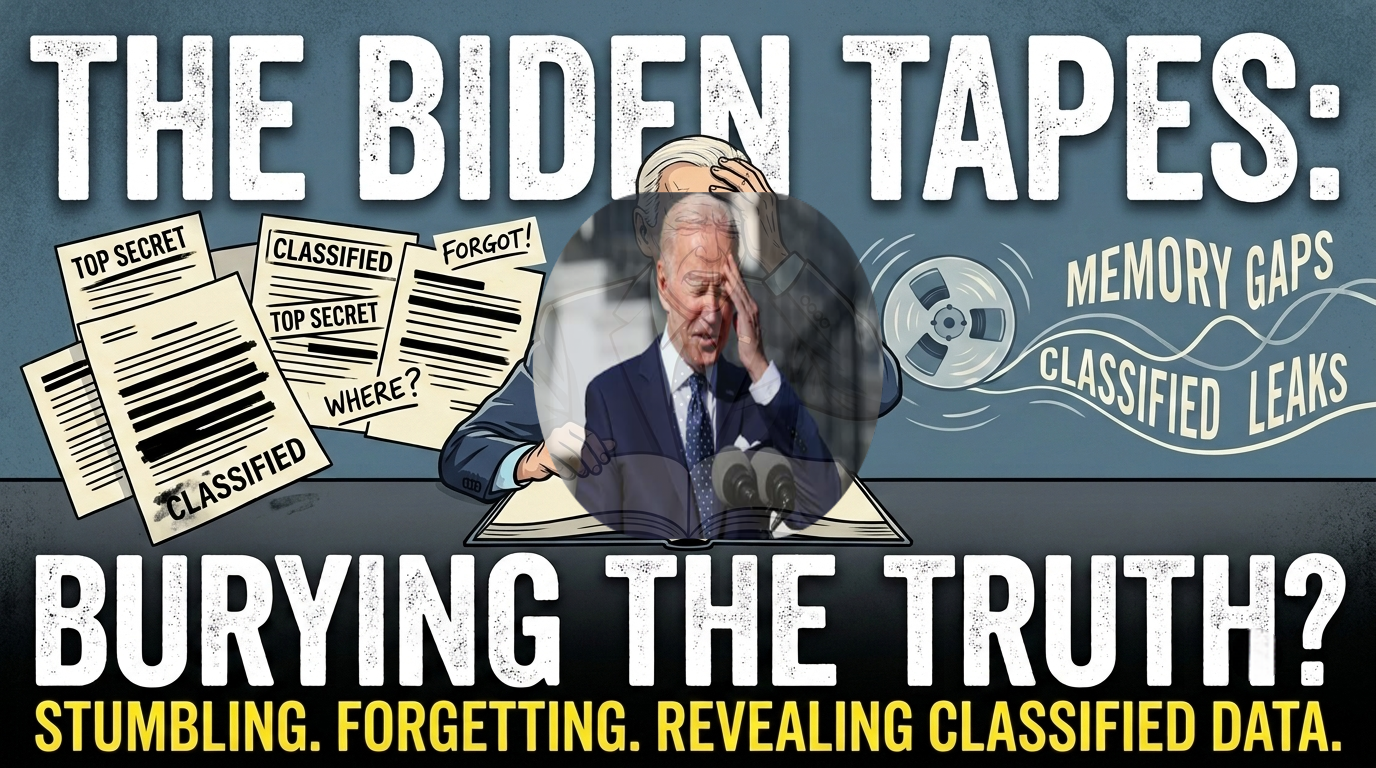
The release of long-sought audio recordings has pulled back the curtain on former President Joe Biden’s conversations with his ghostwriter, reigniting national debate over government transparency, the handling of classified materials, and presidential accountability. Following a rigorous two-year legal battle by the Oversight Project and the House Judiciary Committee, these unvarnished tapes offer the public a firsthand listen to the interviews behind Biden's 2017 memoir, Promise Me, Dad.
Rather than relying on official summaries or media interpretations, the recordings—reported by outlets including MxM News—provide raw, unfiltered context from the months immediately following Biden's departure from the Obama administration. Here is a breakdown of the key revelations and what they mean for the broader political and legal landscape.


Moments of Hesitation and Lost Thought
Throughout the newly released audio files, Biden is heard stumbling through conversations with author Mark Zwonitzer. The recordings capture numerous instances of prolonged pauses, frequent verbal stumbles, and candid admissions of confusion while trying to recall specific details or locate thoughts within his notes.
In one notable exchange, Biden loses his train of thought entirely, admitting to his interviewer: "Alright — what was I going to ask you? Something else … Uh … um. Oh gosh. I can’t think of anything else." During another moment while reviewing personal notes, he pauses the conversation, stating simply, "It’s confusing me." While these moments shed light on his conversational cadence during the 2017 book drafting process, they have also drawn renewed scrutiny regarding his cognitive focus during the years leading up to his presidency.

Experience the ultimate restoration of your gut health with Bio-Defense. (Use Promo Code: TrumpWon for Discount.)
Explicit Discussions of Sensitive Material
Perhaps the most consequential narrative emerging from the tapes involves Biden’s open acknowledgment of possessing sensitive government records. Despite rigorous rules governing the retention of executive branch documents, the recordings reveal that Biden was aware he had kept potentially classified records at his private residence after leaving office.
Direct Acknowledgments: At one point in the interviews, Biden remarks, "in ’09 I just found all the classified stuff downstairs."
Real-Time Identification: While sifting through documents during the interview, he explicitly notes, "The next thing I have here is, um, this is classified," and cautions Zwonitzer, "Some of this may be classified, so be careful with it."
Extensive Note-Taking: According to independent reviews by CBS News, the materials discussed included details from Situation Room meetings, Pentagon briefings, and sensitive notes involving CIA officials and presidential conversations. In an October 2016 recording highlighted by PBS NewsHour, Biden mentioned his extensive records, adding, "They didn’t know I have this."

Start your day with a refreshing glass of Peach Mango Covilyte! Packed with energy, hydration, and a full spectrum of essential vitamins and minerals, it's a delicious way to fuel and protect your body.
The Robert Hur Investigation and the Two-Tiered Justice Debate
These recordings formed a central piece of evidence during former Special Counsel Robert Hur’s investigation into Biden’s handling of classified documents. In his landmark 2024 report, Hur concluded that Biden had indeed willfully retained and disclosed classified materials after leaving office.
However, Hur ultimately declined to recommend criminal charges. His justification—that a jury would likely perceive Biden as a "sympathetic, well-meaning, elderly man with a poor memory"—became a major flashpoint in American politics. Because the decision explicitly cited memory limitations to justify withholding prosecution, the release of these audio tapes makes that reasoning far more tangible to the public. Moreover, critics and legal observers have pointed to the contrasting federal prosecution of President Trump over his own presidential records as evidence of a two-tiered standard of justice.
With significant portions of the newly public audio still carrying lengthy redactions to protect national security secrets, questions remain regarding the full extent of the material shared during the drafting of the multimillion-dollar publishing agreement. As the public and legal experts digest these spoken words, the tapes stand as a critical historical record of how executive documents and accountability are handled at the highest levels of government.
How do you view the balance between executive document retention laws, prosecutorial discretion, and public transparency? Share your thoughts and join the conversation in the comments section below.
Join the Inner Circle
To become a vital part of the journey, you can sign up for the Diamond and Silk Monthly Supporter Program. This program allows fans to provide ongoing support while gaining closer access to their latest updates and initiatives.
Where to Follow and Watch
You can find Diamond and Silk’s content and stay updated on the following platforms:
Video & Streaming: Catch their latest broadcasts and appearances on Lindell TV, Rumble, and Diamond and Silk Media.
Social Media & Community: Engage with them directly on Truth Social, VOCL, and ChatDit.
















Today, a growing and inspiring trend is taking root across the country: the physical spaces inside Muslim mosques and Islamic centers are increasingly stepping up to serve as official polling locations.