Understanding the Rare Link Between COVID-19 Vaccines, Neurological Symptoms, and Psychosis
By The Blog Source
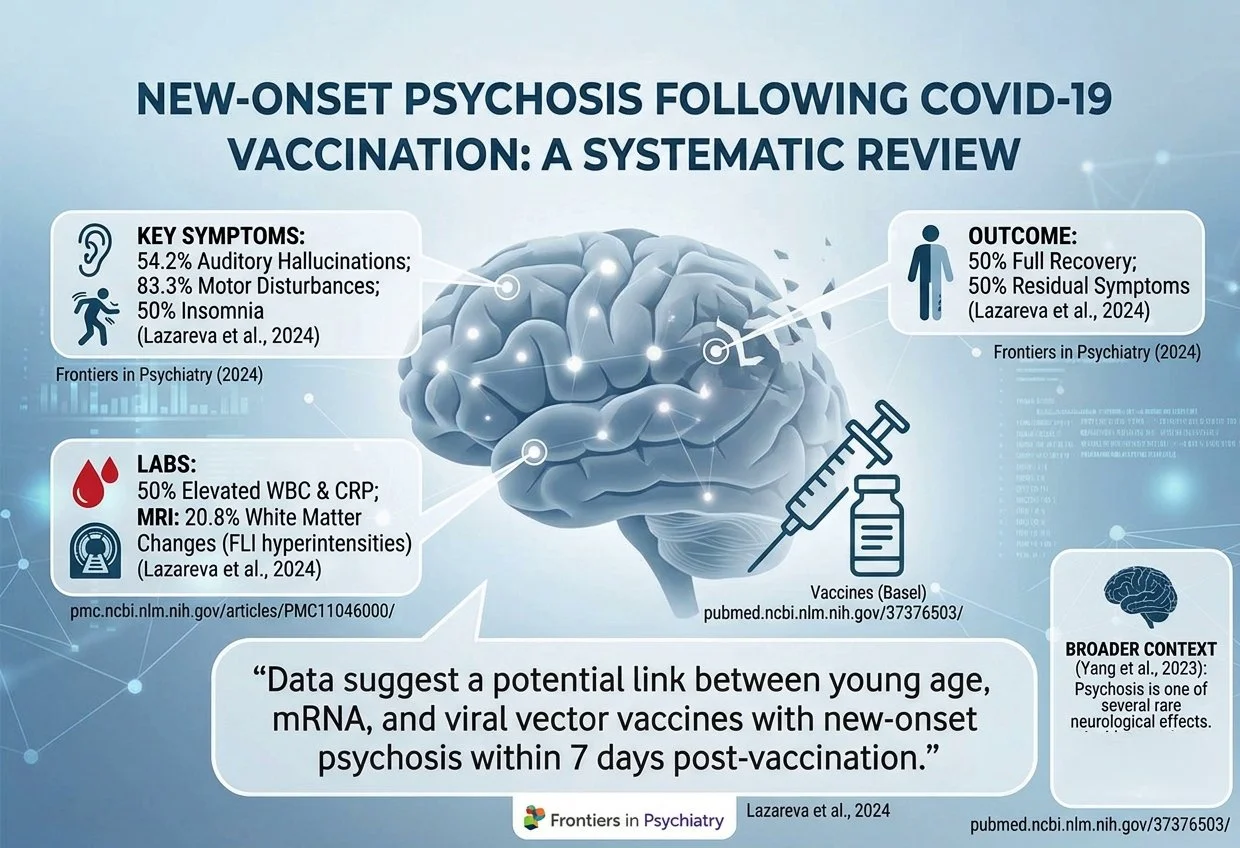
Since their introduction, COVID-19 vaccines have undergone many reviews associated with cases of neurological manifestations after their application . Like all medical treatments, they are continuously monitored for side effects. Researchers are also paying close attention to severe reactions affecting the brain and nervous system.
Recent reviews published in the National Library of Medicine and Frontiers in Psychiatry took a closer look at neurological manifestations and a specific occurrence: new-onset psychosis following COVID-19 vaccination.
Here is a simple breakdown of what researchers have found regarding these events.



The Broader Picture: Neurological Manifestations
A broad review of 13,809 patients analyzed a wide spectrum of neurological issues temporally associated with the vaccines.
Demographics: Most of these broader neurological events occurred in women (63.89%), with a median age of 50 years.
Common Diagnoses: The most frequently reported adverse events included Bell's palsy (35.7%), headaches, and cerebrovascular events (17.47%).
Rarer Conditions: Less frequent conditions included Guillain-Barré syndrome (6.28%), functional neurological disorders (2.88%), and central nervous system demyelination (1.86%).
Vaccine Types: The majority of these published cases occurred after receiving the Pfizer (BNT162b2) vaccine, followed by the AstraZeneca (ChAdOX1-S) vaccine.

Experience the ultimate restoration of your gut health with Bio-Defense. (Use Promo Code: TrumpWon for Discount.)
Zooming In: New-Onset Psychosis
Within the realm of neurological side effects, researchers closely analyzed 24 documented cases of new-onset psychosis following vaccination.
Who Was Affected?
The cases of post-vaccine psychosis primarily involved younger adults, with an average age of about 34 years.
It affected men and women at relatively similar rates, though slightly more females (54.2%) were impacted.
The vast majority of these individuals (91.2%) were otherwise healthy and had no specific history of somatic illness or comorbidities.
When Did Symptoms Appear, and What Were They?
Timing: Symptoms typically began within a week (an average of 5.75 days) of vaccination. This usually occurred after the first (45.8%) or second dose (50%) of the vaccine.
Vaccine Types: These psychiatric events were most commonly associated with the mRNA BNT162b2 vaccine (33.3% of cases) and the viral vector ChAdOx1 nCoV-19 vaccine (25% of cases).
The Symptoms: Patients experienced sudden, severe mental health changes, with 95.8% presenting with psychotic symptoms. This included auditory hallucinations (54.2%), motor disturbances like bizarre behavior or agitation (83.3%), and severe insomnia (50%).

Start your day with a refreshing glass of Peach Mango Covilyte! Packed with energy, hydration, and a full spectrum of essential vitamins and minerals, it's a delicious way to fuel and protect your body.
What Did Medical Tests Show?
Blood Tests: Half of the patients (50%) had abnormalities in their bloodwork, most commonly mild to moderate leukocytosis (elevated white blood cells) and increased C-reactive protein (a marker of inflammation).
Brain Scans: While most were normal, about 20.8% of patients showed abnormal results on MRI scans, often revealing fluid-attenuated inversion recovery (FLAIR) hyperintensity in the brain's white matter.
The Theory: Researchers suspect these psychiatric and neurological complications may be related to vascular, immune, infectious, or functional factors. In some instances, it might represent a systemic inflammatory response or an autoimmune reaction.
Treatment and Recovery
Medications: The majority of patients experiencing psychosis (83.3%) were treated with atypical antipsychotic medications. In cases where an immune reaction was suspected, doctors also used steroids (20.8%) or benzodiazepines (50%).
Recovery: The duration of the psychotic symptoms usually lasted between one and two months. Overall, 50% of the patients had lingering residual symptoms.
Conclusion
It is incredibly important to view these findings in context. Researchers have compiled more than 86 articles, including 13 809 patients with a wide spectrum of neurological manifestations temporally associated with COVID-19 vaccination. Most occurred in women (63.89%), with a median age of 50 years. The most frequently reported adverse events were Bell's palsy 4936/13 809 (35.7%), headache (4067/13 809), cerebrovascular events 2412/13 809 (17.47%), Guillain-Barré syndrome 868/13 809 (6.28%), central nervous system demyelination 258/13 809 (1.86%) and functional neurological disorder 398/13 809 (2.88%). Most of the published cases occurred in temporal association with the Pfizer vaccine (BNT162b2), followed by the AstraZeneca vaccine (ChAdOX1-S). (Source: National Library of Medicine)
With the data currently available, more research is proceeding to establish a definitive causal relationship between these adverse events and the vaccines. To date, no vaccine can be claimed to be completely free of adverse events (Source) and several studies have demonstrated cardiac, gastrointestinal, neurological, and psychiatric side effects associated with COVID-19 vaccines (Source Link 1–Source Link 2).
This article was compiled using verifiable cases showing: altered mental states, psychosis, affective, and functional neurological disorders as psychiatric and neuropsychiatric adverse reactions to mRNA or vector-based COVID-19 vaccines.
Join the Inner Circle
To become a vital part of the journey, you can sign up for the Diamond and Silk Monthly Supporter Program. This program allows fans to provide ongoing support while gaining closer access to their latest updates and initiatives.
Where to Follow and Watch
You can find Diamond and Silk’s content and stay updated on the following platforms:
Video & Streaming: Catch their latest broadcasts and appearances on Lindell TV, Rumble, and Diamond and Silk Media.
Social Media & Community: Engage with them directly on Truth Social, VOCL, and ChatDit.
























In a major announcement for American manufacturing, President Donald J. Trump has announced plans for one of the largest steel plants in the nation's history: a $15 billion Mesabi Metallics mill located in Iowa.